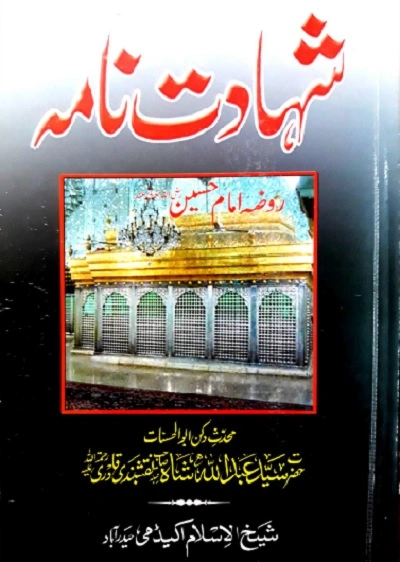
| Book Name | Shahadat Nama Urdu |
| Writer Name | Syed Abdullah Shah |
| File Size | 4.10 MB |
| File Type | PDF Format |
| Download Option | Available |
| Read Online | Available |
The emotional and spiritual depth of Islamic history has consistently been preserved through classical prose and poetic chronicles within the Urdu language. Among the most historically rich and widely respected texts documenting the profound sacrifices of the Holy Prophet’s family, the historical compilation titled Shahadat Nama Urdu By Syed Abdullah Shah Pdf holds an incredibly prominent status.
This masterpiece provides a beautifully descriptive, highly reverent, and structurally sound exploration of the tragic events that unfolded on the hot plains of Karbala. Specifically focusing on the unmatched steadfastness of Hazrat Imam Hussain, the text serves as an invaluable digital resource for modern readers who wish to engage with authentic and traditional accounts of Islamic history.
About the Author
The author behind this spiritually moving and academically sound chronicle was Syed Abdullah Shah, a highly revered nineteenth-century spiritual guide, scholar, and classical writer from the South Asian subcontinent. Known for his deep devotion to the household of the Prophet and his mastery over traditional historical records, he wrote with a specific focus on spiritual transformation.
His research methodology sets his work apart because he combines verified historical events with the classic sufistic approach of internalizing historical sacrifices. His unique writing style skillfully blends high literary prose with simple language, allowing everyday believers and academic students alike to access deep spiritual records.
Summary of Shahadat Nama Urdu By Syed Abdullah Shah Pdf
The core narrative of the book functions as a chronological biography and detailed historical record tracking the historic migration and subsequent trials of the holy family. It begins by establishing the high spiritual rank and virtues given to the grandson of the Holy Prophet during his childhood, framing his life as an embodiment of prophetic values.
The text then transitions into a systematic analysis of the political landscape of the era, explaining the structural decisions that led Imam Hussain to move from Medina to Mecca, and finally toward Iraq. The final chapters provide a step-by-step account of the first ten days of Muharram, documenting the patience, extreme thirst, and the final moments of the martyrs.
Major Themes of the Book
The classical analysis within this text is structured around several primary themes that offer a holistic understanding of the Karbala tragedy:
-
The Spiritual Inheritance of the Family: Detailing the divine connection and spiritual authority passed down to the household of the Prophet to guard the true spirit of Islam.
-
The Principle of Truth Over Submission: Explaining the theological reasons why accepting an unjust system was fundamentally impossible for the protectors of the prophetic legacy.
-
The Elegiac Portrayal of Sacrifice: Utilizing classical Urdu narrative styles to capture the deep emotional sorrow of the event while keeping the historical facts precise.
-
The Universal Victory of the Oppressed: Presenting the ultimate outcome not as a physical or political loss, but as a permanent victory of human dignity over temporal power.
Message and Moral Lessons
The moral lessons detailed throughout this work emphasize that true success is measured by commitment to spiritual principles rather than worldly authority or military numbers. The text teaches readers that standing firm against moral corruption, injustice, and tyranny is an absolute requirement of faith, regardless of the personal cost involved.
It reminds the global community that the sacrifice of the holy family established a timeless blueprint for human rights and selflessness, inspiring individuals across all generations to preserve their moral integrity when facing immense societal pressures.
Impact of the Book
Since its initial publication, this specific chronicle has had a profound impact on traditional storytelling and devotional literature across the subcontinent. It has served as a primary sourcebook for religious speakers and writers during the annual mourning assemblies of Muharram, ensuring that historical details are related accurately without clinical coldness.
By presenting the tragic events through an authentic and emotionally engaging framework, it has successfully preserved classical history for generations. Its modern availability in digital formats has vastly expanded its reach, allowing younger readers to explore traditional devotional history on their personal electronic devices.
FAQs
What is the primary focus of the text Shahadat Nama Urdu By Syed Abdullah Shah Pdf? The primary focus of this book is to provide a chronologically accurate, spiritually deep, and emotionally reverent account of the life, virtues, and martyrdom of Hazrat Imam Hussain at Karbala.
Who is the author of this classical Urdu historical work? The book was written and compiled by the notable nineteenth-century spiritual scholar and historian Syed Abdullah Shah.
Can general readers easily understand the language used in this text? Yes, despite being a classical work, the language is highly accessible and smooth, making it perfect for families, students, and general historical researchers.
Conclusion
Engaging with the monumental historical events that protected the structural integrity of faith requires looking through disciplined and authentic literature, which is precisely what the Shahadat Nama Urdu by Syed Abdullah Shah Pdf offers.
By perfectly balancing traditional historical accuracy with an unyielding spiritual devotion to the household of the Prophet, this work remains a definitive guide for understanding the spiritual depths of the Karbala tragedy. For any reader looking to enrich their religious knowledge, clarify historical timelines, and implement timeless moral values into their daily life, downloading and reading this classic digital text is highly recommended.