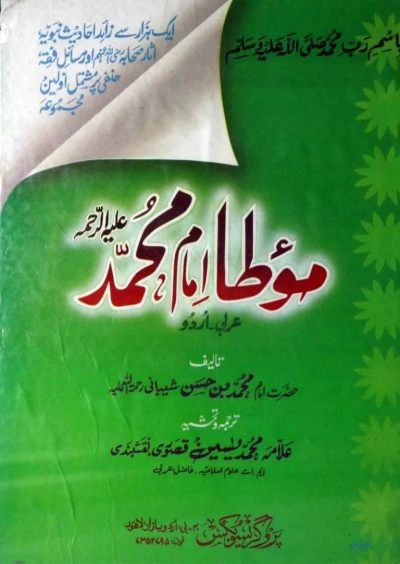
| Book Name | Muwatta Imam Muhammad Urdu |
| Author Name | Imam Muhammad bin Al-Hasan Al-Shaybani |
| File Size | Varies |
| File Type | PDF Format |
| Download Option | Available |
| Read Online | Available |
The study of Hadith and Islamic jurisprudence relies heavily on classical texts that bridge prophetic traditions with practical legal rulings. One of the most significant and foundational works in this category is the Muwatta Imam Muhammad Urdu PDF Download. Compiled originally in Arabic, this extraordinary book is a unique recension of the original Muwatta of Imam Malik, viewed through the lens of the Hanafi school of law.
It serves as a vital bridge between the legal methodologies of the scholars of Medina and the scholars of Iraq. By downloading and reading the Urdu translation of this text, readers gain direct access to an authentic record of early Islamic jurisprudence, prophetic narrations, and the analytical reasoning that shaped Islamic legal systems for centuries.
About the Author
The text was compiled by Imam Muhammad bin Al-Hasan Al-Shaybani, a legendary figure in Islamic history born in the eighth century. He was one of the primary and most brilliant students of Imam Abu Hanifa, and he also studied directly under Imam Malik bin Anas in Medina for over three years. Because of this unique educational background, Imam Muhammad was uniquely qualified to synthesize the Hadith traditions of Medina with the rational legal framework of Iraq. His vast contributions to Islamic jurisprudence made him a foundational pillar of the Hanafi school of thought, and his writings remain authoritative reference points across the Muslim world.
Summary of Muwatta Imam Muhammad
This classical Hadith manual is essentially Imam Muhammad’s narration of the traditions collected by Imam Malik, supplemented by his own extensive legal commentary. The book systematically covers various aspects of daily life and religious practices, organized into structured chapters. It includes legal rulings and prophetic narrations regarding ritual purification, prayers, funerals, zakat, fasting, and the pilgrimage to Mecca.
Furthermore, the text extends into complex social and economic matters. Extensive volumes, which are often studied through explanatory works like the Sharah Mota Imam Muhammad Jild 1 and Sharah Mota Imam Muhammad Jild 2, deal with business transactions, marriage laws, divorce, and judicial inheritance. In later sections, such as those covered in Sharah Mota Imam Muhammad jild 3, the book focuses on dietary laws, judicial governance, and general ethical behavior, making it a comprehensive manual for personal and communal life.
Major Themes of the Book
A primary theme of this work is the harmonization of textual evidence with rational legal deduction. Throughout the text, Imam Muhammad presents a Hadith narrated by Imam Malik and then explains whether the Hanafi scholars accept it as the basis for their practice or if there is another stronger tradition they follow.
Another key theme is the preservation of early Islamic practices. The book serves as a living record of how the earliest generations of Muslims in both Medina and Kufa practiced Islam. It provides modern researchers with a clear view of how legal reasoning evolved during the golden era of Islamic scholarship.
Message and Moral Lessons of Muwatta Imam Muhammad Urdu PDF Download
The overarching message of this text is the importance of maintaining scholarly integrity, balance, and deep respect for differing legal opinions. It teaches readers that Islamic law is flexible, intellectual, and deeply rooted in preserving human welfare and justice.
The moral lessons found in these prophetic narratives encourage honesty in commerce, compassion in social relations, and total sincerity in acts of worship. By studying the practical applications of these rulings, readers understand that true piety is not just about isolated rituals but about conducting everyday affairs with moral accountability.
Read More:
Impact of Muwatta Imam Muhammad Urdu PDF Download
The impact of this text on Islamic scholarship is immense. It stands as a primary proof text demonstrating the deep connection between Hanafi jurisprudence and authentic Hadith traditions. For centuries, it has been taught as a core text in religious seminaries globally. The availability of this work in Urdu has revolutionized its accessibility, allowing everyday readers and local scholars across South Asia to bypass language barriers and connect directly with classical eighth-century Islamic scholarship.
FAQs
What makes Muwatta Imam Muhammad different from the original Muwatta? It is a specific recension where Imam Muhammad narrates the traditions of Imam Malik but adds his own notes, comparisons, and Hanafi legal opinions after almost every narration.
Is there a complete translation available for readers today? Yes, the text is widely translated, and readers can access the Muwatta Imam Muhammad Urdu or even a Muwatta Imam Muhammad English PDF for academic study.
Why is studying the Sharah Mota Imam Muhammad Jild 1 important? The explanatory volumes provide contextual commentary and detail the specific reasons behind the differences in legal opinions between early scholars.
Where can someone access a Muwatta Imam Muhammad Urdu PDF download? Authentic copies of this book can be safely obtained from online Islamic libraries, educational websites, and reliable digital archives.
Conclusion
The Muwatta Imam Muhammad Urdu PDF Download remains a timeless masterpiece that preserves the intellectual heritage of early Islamic jurisprudence. By presenting prophetic traditions alongside analytical legal commentary, it gives readers a clear understanding of how Islamic laws are derived.
Whether you are consulting the core narrations or exploring detailed commentaries found in a Mota Imam Muhammad Urdu Sharah, the text provides unparalleled clarity. Downloading the Muwatta Imam Muhammad Urdu Pdf Download offers an excellent opportunity for students, scholars, and general readers to enrich their knowledge and appreciate the depth of classical Islamic thought.